
 BanditAI
941 Deposit Schedule Determiner: Are You a Monthly or Semiweekly Depositor?
Find out whether you're a monthly or semiweekly depositor for Form 941. This tool uses your reported employment taxes from the IRS lookback period to determine which 941 deposit schedule may apply to your business.
Find Your 941 Deposit Schedule in Under 60 Seconds
Your schedule is set by your total tax liability during the IRS lookback period, not by how often you run payroll.
Answer a few questions to find yours.
Did your business pay employees and file Form 941 before this year?
This tells us whether you have a lookback period to check yet. What is a lookback period?
No, I'm a new employer
This is our first calendar year paying wages / filing Form 941.
Yes, I filed Form 941 last year
We have prior quarters we can look back on.
Disclaimer: This result is based only on the answers you provided, using general guidance from IRS Publication 15 and Notice 931. It is not a
final determination or tax advice. Confirm your schedule using any IRS notice you've received or a licensed tax professional before you deposit or file.
How 941 Deposit Schedules Actually Work
Your 941 deposit schedule, either monthly or semiweekly, is determined by your tax liability during a prior
12-month lookback period, rather than how often you run payroll.
What is the lookback period for 941?
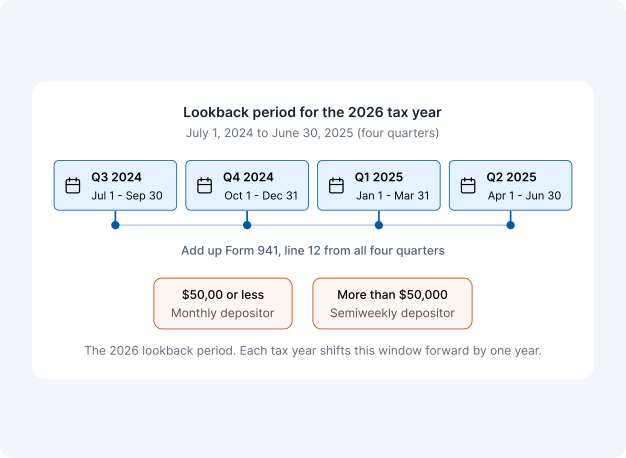
The lookback period for IRS Form 941 covers 12 consecutive months beginning on July 1 of the second prior year and ending on June 30 of the prior year.
For example, to determine your deposit schedule for 2026, the IRS reviews the total tax liability reported on Line 12 of Form 941 filed from July 1, 2024, through
June 30, 2025.
New employer? Your lookback is zero.
For Form 941 filers, your tax liability for any quarter in the lookback period before you started or acquired your business is considered to be zero. Therefore, you're a monthly schedule depositor for the first calendar year of your business.
Learn more about:

941 Monthly Deposit Schedule
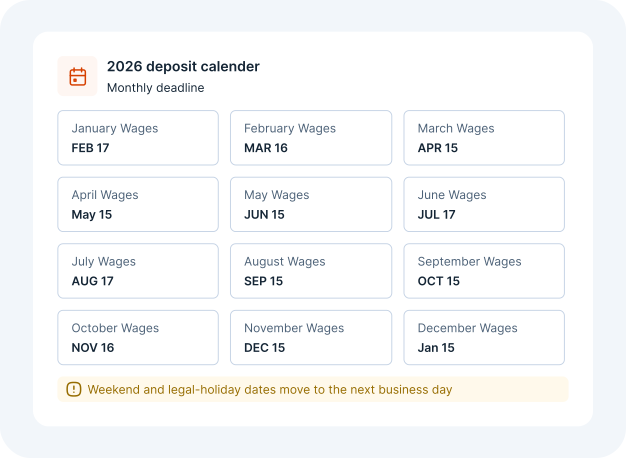
Under IRS monthly 941 deposit rules, if you have reported $50,000 or less in total payroll taxes during the lookback period you must deposit accumulated federal income and FICA taxes by the 15th day of the following month.
All deposits must be paid electronically using the Electronic Federal Tax Payment System (EFTPS).
On Form 941 each quarter
Example scenario
Bandit LLC had a lookback total of $38,000, so it's a monthly depositor. It runs payroll twice in March and the employment taxes add up to $6,200.
All of March's taxes are due by April 15, no matter how many paydays happened in March.
941 Semiweekly Deposit Schedule
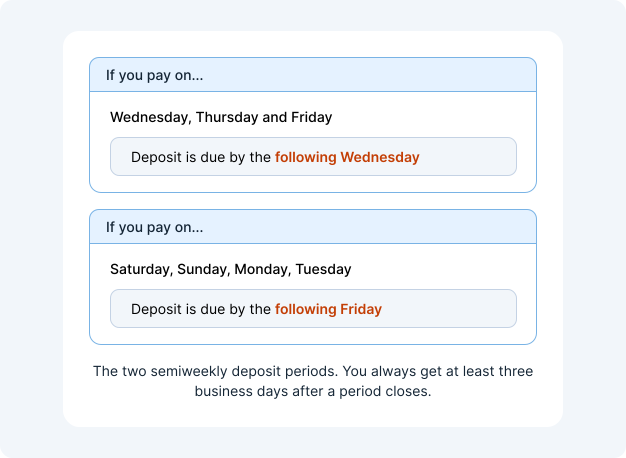
Under the 941 semiweekly deposit rule, if your lookback total was more than $50,000 you are considered a semiweekly schedule depositor. Your deposit due date depends on the exact day you pay your workers.
- If payday is on Wednesday, Thursday, or Friday, deposit taxes by the following Wednesday.
- If payday is on Saturday, Sunday, Monday, or Tuesday, deposit taxes by the following Friday.
All deposits must be paid electronically using the
Electronic Federal Tax Payment System (EFTPS).
Example scenario
Bandit Studio had a lookback total of $72,000, so it deposits semiweekly. It pays employees every Friday.
Because Friday falls in the Wednesday–Friday period, each payday's taxes are due the following Wednesday.
On Form 941 each quarter
Special Rules
The $100,000 Next-Day Deposit Rule
If your accumulated tax liability reaches $100,000 or more on any single day, you must deposit it by the next business day . This applies even if you're normally a monthly or semiweekly depositor.
Deposit schedule change
When the next-day deposit rule applies, you immediately become a semiweekly depositor for the rest of that calendar year and you must attach Form 941 Schedule B.
The $2,500 Quarterly Rule
If your Form 941 line 12 total is less than $2,500 for both the current quarter and the prior quarter, and you haven't triggered the $100,000 next-day rule, you can pay the full amount directly when you file Form 941.
When in doubt, deposit.
If you're not sure your liability is under $2,500 and last quarter wasn't under $2,500 either, make deposits on the monthly or semiweekly schedule anyway. That protects you from failure-to-deposit penalties.
Frequently Asked Questions
New employers are automatically monthly schedule depositors for their entire first calendar year, since any lookback quarter before your business existed counts as zero tax liability.
Add up Line 12 from the Form 941 returns filed during your lookback period, the 12 months from July 1 two years back through June 30 of last year. $50,000 or less makes you a monthly depositor; more than $50,000 makes you a semiweekly depositor for the whole current year.
Monthly vs. semiweekly at a glance
| Monthly depositor | Semiweekly depositor | |
|---|---|---|
| Who qualifies | Lookback total ≤ $50,000 (and all new employers) | Lookback total > $50,000 |
| When to deposit | By the 15th of the following month | Wed–Fri paydays → next Wed; Sat–Tue paydays → next Fri |
| Schedule B? | Not required; report on Form 941 line 16 | Required every quarter |
| Form 941 line 16 box | Check "monthly," enter 3 monthly totals | Check "semiweekly," attach Schedule B |
| Next-day rule | Applies, and flips you to semiweekly | Applies; deposit that day's tax by the next business day |
Your schedule can shift every year as the lookback window rolls forward, and the IRS does not always send an individual notice about it. Recheck your lookback total every fall so you start the new year on the right schedule from January 1.
Federal employment tax deposits must be made electronically through EFTPS, the Electronic Federal Tax Payment System. Paying by check or cash instead can add a separate penalty on top of any late-deposit penalty.
If your total liability for a full quarter stays under $2,500, you can pay it when you file Form 941 instead of depositing it periodically. If you're not sure it will stay under that line, depositing on your assigned schedule is the safer option.
That amount is due by the next business day, no matter your normal schedule. It also converts you to a semiweekly depositor for the rest of the current year and for all of the following year.
Yes. The $2,500 rule is a per-quarter exception, separate from your assigned schedule. If your total tax for the current quarter is under $2,500 and you haven't triggered the $100,000 next-day rule that quarter, you can pay with your return instead of depositing, whether you're a monthly or semiweekly depositor. It doesn't remove your semiweekly status or your Schedule B requirement in other quarters; it only applies to the specific quarter that qualifies.
Manage 941 Deposits and Filing in One Place
You've figured out your 941 deposit schedule, now stay ahead of every deadline. TaxBandits handles your EFTPS deposits,
Form 941, and Schedule B in one place.