
 BanditAI
Understanding Form W-8ECI
-
Form W-8ECI is an IRS document provided to a withholding agent or payer by a foreign person who is the beneficial owner of the U.S.-source income.
-
Its purpose is to certify that the income is effectively connected with a trade or business in the United States (ECI) and to claim an exemption from the standard 30% withholding or backup withholding on eligible types of income included in the foreign person’s gross income.
-
For personal services income earned by nonresident aliens, Form 8233 must be used instead of Form W-8ECI.
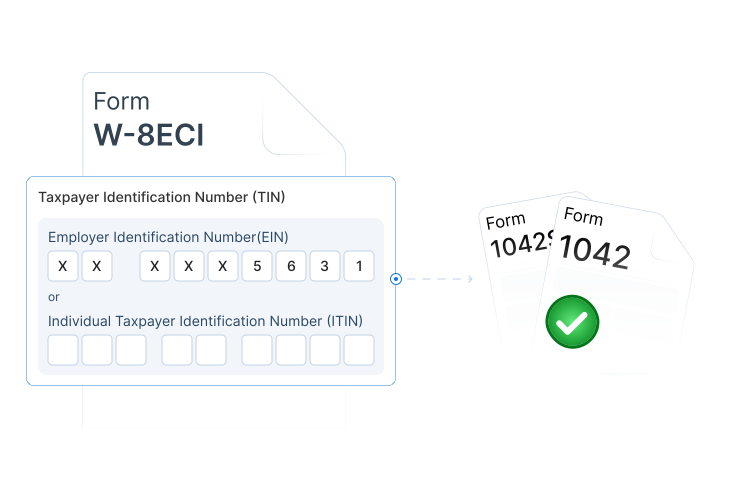
What Information is Required to Complete Form W-8ECI?
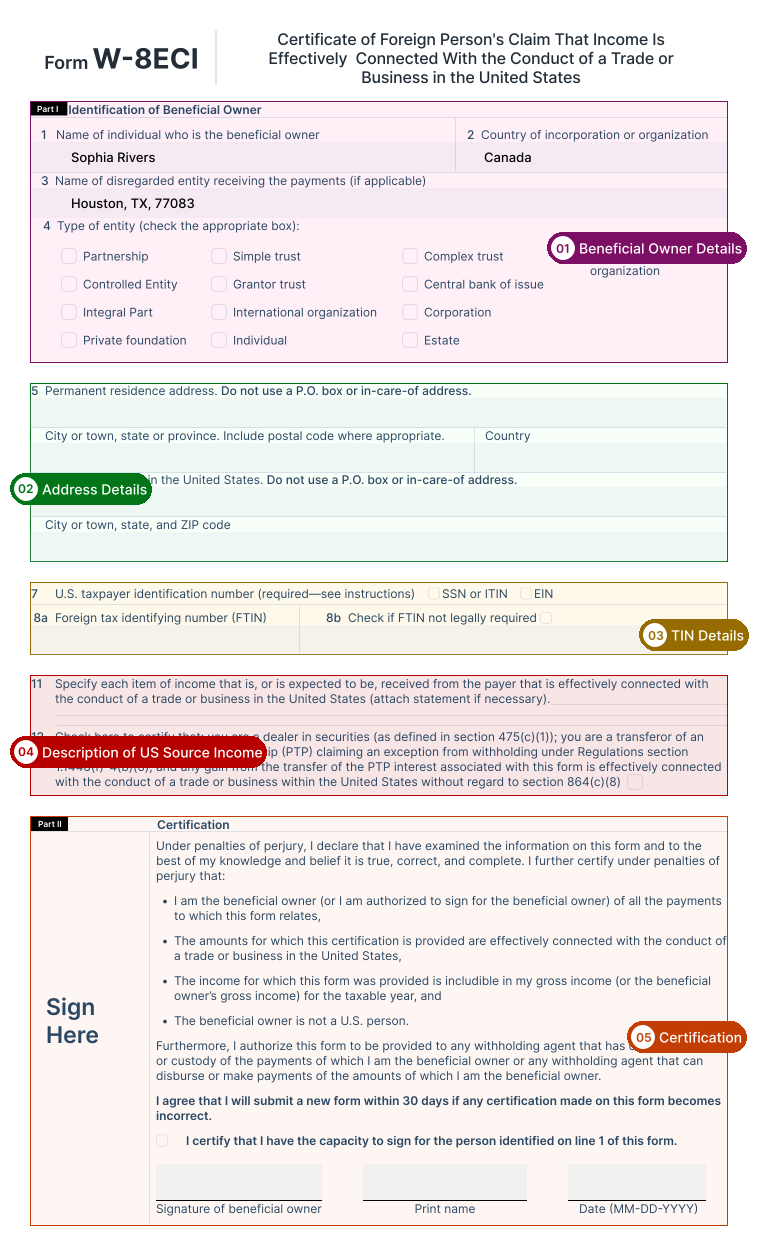
When your recipients fill out Form W-8 ECI, they must provide the following key information:
-
01. Identification
- Name of the individual or organization receiving the income
- Country of incorporation or organization (for entities)
- Name of any disregarded entity (if applicable)
- Type of entity (individual, corporation, partnership, trust, etc.)
-
02. Address Details
- Permanent address (no P.O. box)
- U.S. business address (if applicable)
-
03. Tax Identification
- U.S. Taxpayer Identification Number (TIN)
- Foreign Tax Identification Number (if applicable)
-
04. Income Details
- Description of income effectively connected with a U.S. trade or business
- Reference number(s) (optional)
- Date of birth (for individuals)
-
05. Authorization
- Signature and date of the beneficial owner (or authorized representative) certifying the information is accurate
What Happens if Form W-8ECI is Not Provided?
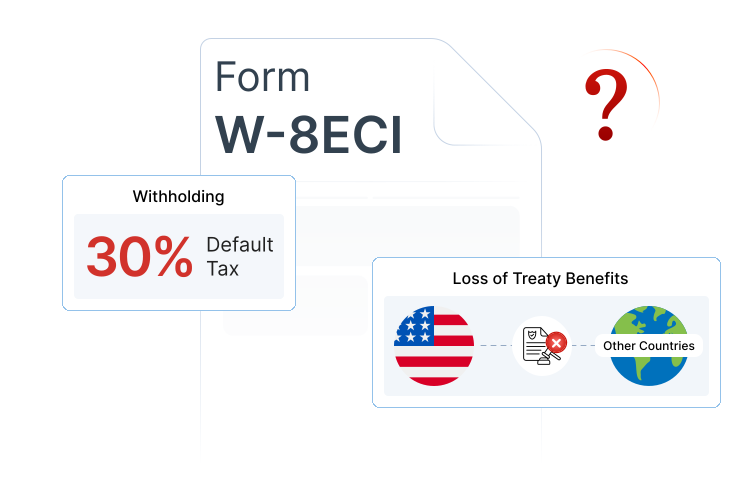
- Backup Withholding: If a valid Form W-8ECI is not provided, the withholding agent must generally withhold tax at the standard 30% rate on U.S.-source income, even if the income is effectively connected with a U.S. trade or business.
- Loss of Withholding Exemption: Without a properly completed Form W-8ECI, the recipient cannot claim exemption from withholding on ECI (Effectively Connected Income), leading to unnecessary over-withholding.
- Delayed or Denied Payments: Payers may delay or deny payments until a valid W-8ECI is received, especially when dealing with service income, rent, or royalties tied to U.S. activity.
- Audit Exposure: Providing false or misleading information on Form W-8ECI may result in IRS penalties and increased audit risk for both the foreign person and the withholding agent.
Challenges of Collecting Form W-8ECI Manually
Collecting W-8ECI forms manually can create significant administrative and compliance challenges for payers:

Incomplete or Incorrect Forms
Missing fields, invalid treaty claims, or unsigned forms lead to rework and delays.

Higher Compliance Risk
Errors can result in incorrect withholding and penalties during IRS audits.

Time-Consuming Follow-ups
Chasing foreign recipients for corrections increases administrative workload.

Put W-8s on autopilot, eliminate delays, and move beyond the messy chase.

Request W-8ECI Electronically
Turn days of waiting into minutes with electronic
W-8ECI requests.

Setup Reminders
Automate follow-ups so vendors never slip through the cracks.

Secure Dashboard
Keep track of all your recipients’ W-8ECI in a centralized place.

OFAC Screening
Real-time screening to verify that no individuals or entities appear on OFAC’s sanctions lists.

Stop chasing W-8ECI forms manually. Reduce compliance stress with TaxBandits W-9 Manager.
Frequently Asked Questions
Who is the beneficial owner of a W-8ECI?
The beneficial owner is the foreign person who ultimately owns or receives the U.S.-source income that is effectively connected with a U.S. trade or business. The form is completed by the beneficial owner—not an intermediary.
What is the difference between Effectively Connected Income (ECI) and FDAP income taxation for nonresident aliens?
The IRS treats ECI and FDAP income differently for nonresident aliens:
-
FDAP (Fixed, Determinable, Annual, or Periodical) Income:
- Not connected with a U.S. trade or business.
- Taxed at a flat 30% rate on the gross amount.
- Deductions or credits cannot reduce FDAP tax.
- Tax rate may be reduced by an income tax treaty.
-
ECI (Effectively Connected Income):
- Connected with a U.S. trade or business.
- Taxed at a graduated U.S. income tax rates, similar to U.S. residents.
- Deductions and credits are allowed against the income.
In short, FDAP is passive income taxed at a flat rate, while ECI is trade or business income taxed with normal rates and deductions.
How long is Form W-8ECI valid?
Form W-8ECI is valid for the year it is signed and the next three full calendar years, unless a change in circumstances makes the information incorrect.
For Example: If a foreign beneficial owner signs Form W-8ECI on December 15, 2025, the form remains valid through December 31, 2028.
When to Provide Form W-8ECI to the Withholding Agent?
Form W-8ECI must be provided before any U.S.-source income is paid, credited, or allocated to the foreign beneficial owner. This allows the withholding agent to apply the correct withholding treatment.
For Example: A foreign company expects to receive U.S.-source income that is effectively connected with its U.S. trade or business starting in March 2025. The company must submit Form W-8ECI to the withholding agent before the first payment is made. If the form is not provided on time, the payer may withhold tax at the default 30% rate.