
 BanditAI
Georgia Business Tax Extensions Filing Requirements
Businesses in Georgia generally receive a 6-month automatic extension if they have filed IRS Form 7004 for the current tax year and it has been accepted. If the business did not file a federal extension or if the federal extension was rejected, the business must file a separate state extension using Georgia Form IT-303 to request a Georgia tax extension. The extension applies only to the tax return, not to the tax due.
| Business Classification | Tax Form | Due Date | Extension Form | Extension Period |
|---|---|---|---|---|
|
Corporation (including LLCs taxed as corporations) |
Form 600 |
15th day of the 4th month after the tax
year ends (April 15 for calendar-year filers) |
Form IT-303 or Federal Form 7004 |
7 months extension |
| S Corporation | Form 600S |
15th day of the 3rd month after the tax
year ends (March 15 for calendar-year filers) |
Form IT-303 or Federal Form 7004 |
6 months extension |
|
Partnership (including LLCs taxed as corporations) |
Form 700 |
15th day of the 3rd month after the tax
year ends (March 15 for calendar-year filers) |
Form IT-303 or Federal Form 7004 |
6 months extension |
| Fiduciary | Form 501 |
15th day of the 4th month after the tax
year ends (April 15 for calendar-year filers) |
Form IT-303 or Federal Form 7004 |
5 ½ month extension |
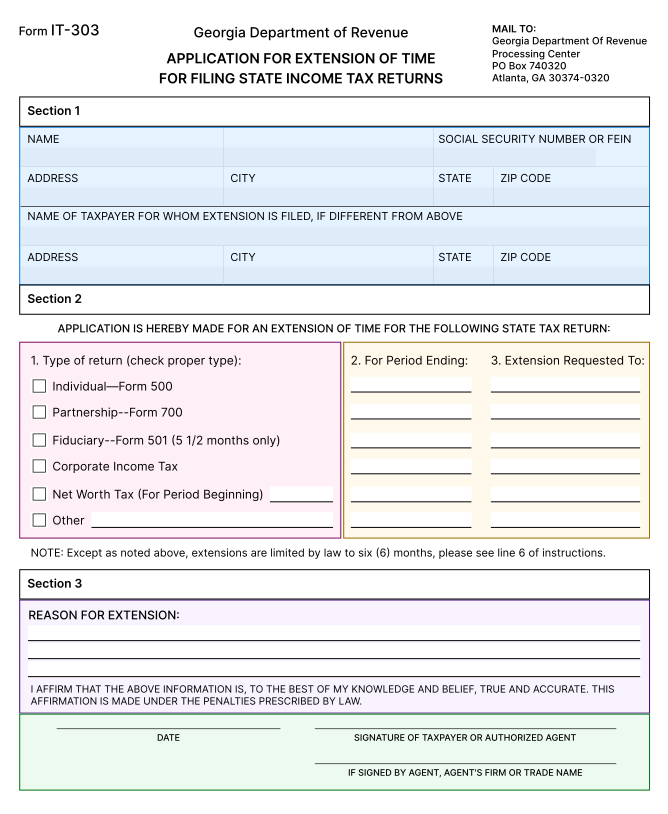
Information Required to File Georgia Extension Form IT-303
Review the key details required to accurately complete and submit your Georgia Form IT-303 extension on time.
Basic Business Information
Provide the legal details of the business requesting the extension. This includes:
- Legal business name
-
Federal Employer Identification Number (FEIN) or Social Security Number
(if applicable) - Mailing address, city, state, and ZIP code
Business Tax Return Type
Indicate the type of Georgia tax return for which you are requesting the extension (e.g., individual, partnership, corporate income tax, net worth tax).
Tax Period & Extension Requested
Enter the tax period ending date and the new extended filing date you are requesting (extensions are generally up to six months).
Reason for Extension
Provide a brief explanation justifying the
extension request.
Authorization & Signature
Signed and dated by the taxpayer or authorized agent, certifying the accuracy of the
information provided.
How to File Georgia Tax Extension Form IT-303
Learn how to file Georgia Form IT-303 to request an extension of time to file your corporate income or franchise tax return.

E-filing
-
1
Access the Portal
Log in to the Georgia Tax Center (GTC) website.
-
2
Locate Form IT-303:
Navigate to the extensions section and select Form IT-303 – Application for Extension of Time to File.
-
3
Enter Business Information
Provide your FEIN, business name, mailing address, and tax year ending date.
-
4
Calculate Tentative Tax
Enter the estimated Georgia tax liability for the year.
-
5
Submit and Pay
Electronically submit the extension request. If tax is due, ensure payment is made by the original return due date to avoid penalties and interest.

Paper Filing
-
1
Download the Form
Download the Form IT-303 from the Georgia Department of Revenue website.
-
2
Complete the Form
Complete all required information, including taxpayer name, address, SSN/FEIN, and the reason for the extension.
-
3
Calculate Payment
Check if any tax is due. The extension is valid only when the estimated tax is calculated and paid.
-
4
Mail the Form
Send the completed form and mail

Georgia Department of Revenue,
P.O. Box 740320,
Atlanta, GA 30374-0320.
Frequently Asked Questions
When is the deadline to file Georgia business tax returns 600, 600S, 700, & 501?
Georgia business tax returns are due based on the entity type and tax year:
Georgia Corporation Income Tax Return (Form 600):
- Due by the 15th day of the fourth month after the end of the tax year (for calendar-year corporations, April 15).
Georgia S Corporation Income Tax Return (Form 600S):
- Due by the 15th day of the third month after the end of the tax year (for calendar-year S-corps, March 15).
Georgia Partnership Income Tax Return (Form 700):
- Due by the 15th day of the third month following the close of the tax year (calendar-year partnerships are generally March 15).

If a deadline falls on a weekend or legal holiday, the due date shifts to the next business day. Additional relief may apply in federally or state-declared disaster situations. Businesses may face penalties if returns are not filed on time.
What are the penalties for filing Georgia business tax return 600, 600S, 700, & 501 late?
If you file Form IT-303 late—or you miss filing the underlying return after the extension—Georgia may assess:
-
Late Filing Penalty:
5% of the unpaid tax for each month or part of a month the return is late, up to a maximum of 25%.
-
Late Payment Penalty:
0.5% of the unpaid tax for each month or part of a month the tax is not paid, up to 25%. This penalty applies even if a filing extension was granted.
-
Underpayment of Estimated Tax:
5% of the underpayment of the tax due
-
Interest:
Accrues on any unpaid tax from the original due date at the Federal Reserve prime rate plus 3%, adjusted annually.
Can I Extend the Form 600, Form 600S, and Form 700 Deadlines?
Yes, Georgia allows a 6-month extension for filing Form 600, 600S, and 700. To request an extension:
-
With a Federal Extension: If you have a valid federal extension (such as IRS Form 7004), Georgia automatically recognizes the federal extension and grants a
6-month extension to file your state return. Attach a copy of the federal extension to your Georgia return when you file. -
Without a Federal Extension: Submit Georgia Form IT-303 (Application for Extension of Time for Filing State Income Tax Returns) before the original due date of the return. If approved, Georgia grants a 6-month extension to file your state income tax return. Attach a copy of Form IT-303 to your return when you file.
An extension to file does not extend the time to pay any tax due. Payments must be made by the original due date to avoid penalties and interest.

Success Starts with TaxBandits
The Smart Business Owners Choice